The Need to Win
Why losing feels unbearable for some children
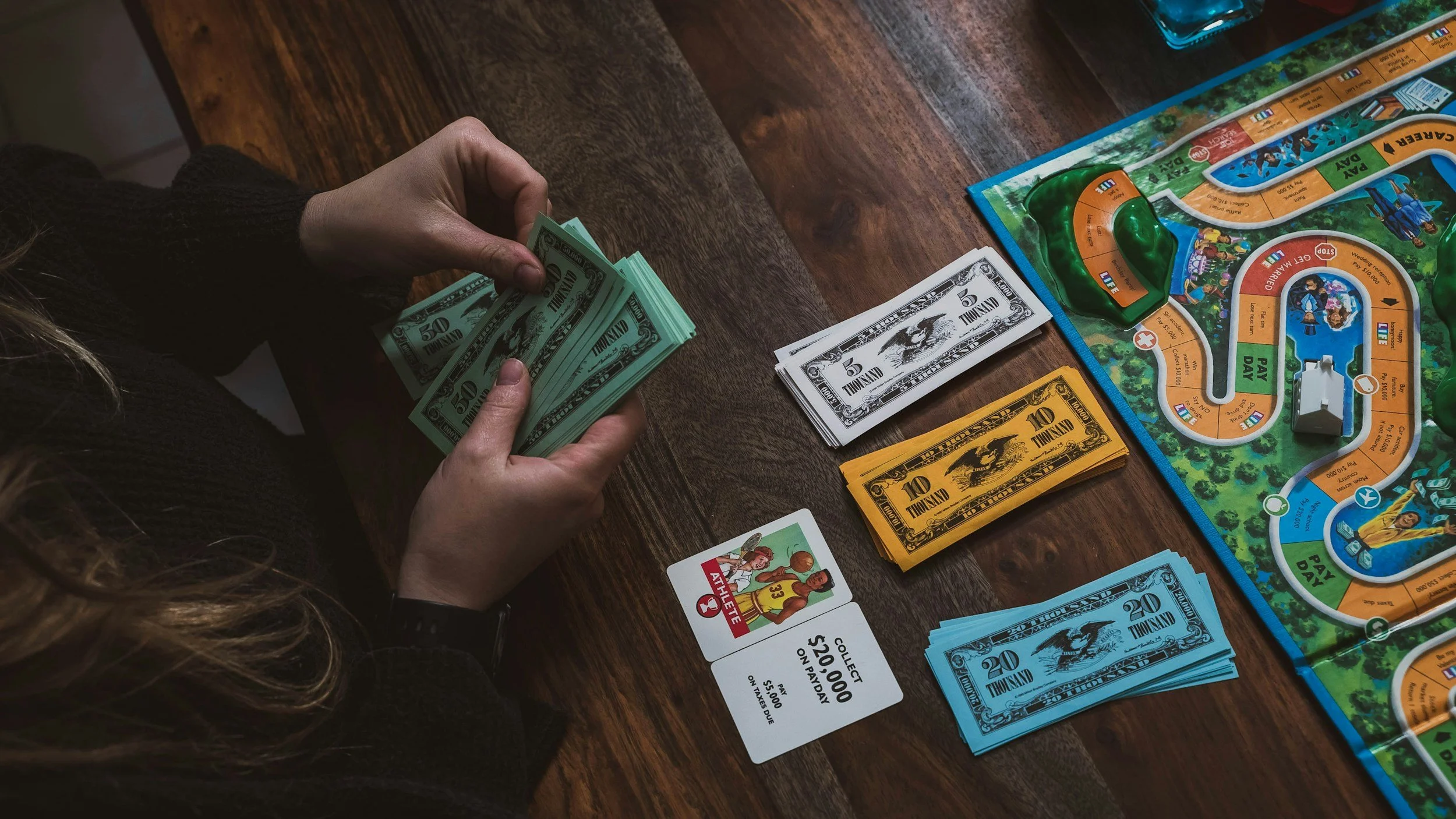
You are playing a board game with your child and everything is going great. They are laughing, having fun, and completely engaged. Then they lose.
Suddenly, they are crying, accusing you of cheating, demanding to play again, or sweeping the game pieces onto the floor. Maybe they immediately start explaining why the game was unfair or announce that they didn't even want to play in the first place.
It can be incredibly frustrating to watch your child completely fall apart over something that seems so insignificant. You might find yourself saying, “It’s just a game!” And to you, it is. But to your child, losing may represent something much bigger.
As a child therapist and play therapist in San Luis Obispo, I am much more interested in understanding why a child needs to win than I am in teaching them how to be a gracious loser. There are a lot of reasons that losing might be particularly difficult for a child, and understanding what is happening underneath the behavior can give us a much better idea of how to help.
Losing Is Hard
First, it is worth acknowledging something very basic: losing doesn't feel good.
Adults don't particularly like losing either. The difference is that most adults have had decades of experience being disappointed, frustrated, embarrassed, and unsuccessful. Hopefully, somewhere along the way, we have developed the ability to experience those feelings without flipping the Monopoly board.
Children are still developing that ability.
The parts of the brain responsible for things like impulse control, emotional regulation, flexible thinking, and considering consequences are still very much under construction. So when your child experiences the immediate rush of anger and disappointment that comes with losing, they may genuinely have difficulty accessing the skills they need to manage that feeling.
This doesn't mean that throwing game pieces is acceptable. It does mean that your child may need some help learning what to do with that enormous feeling before we assume that they are simply being a “sore loser.”
What Does Winning Mean?
For some children, winning is just fun. For others, it can become tied to something much more important.
A child who is struggling with confidence might interpret losing as evidence that they aren't good at something. A perfectionistic child might experience losing as failure. An anxious child might struggle with the uncertainty of not knowing how the game is going to end.
For other children, the issue may be control.
If you think about it, children have very little control over their own lives. They don't decide whether they have to go to school, when bedtime is, where the family lives, what their teacher assigns for homework, or whether their little brother gets to come along on the family vacation. Adults make an enormous number of decisions for children because, well, we're the adults.
Games offer children a small world where they have some power. They make decisions. They develop strategies. They can defeat an adult. They can be the strongest, smartest, fastest, or most powerful person in the room.
For a child who is feeling particularly powerless in other parts of their life, winning can feel really good.
And losing can feel especially threatening.
Start With Curiosity
If your child struggles significantly with losing, I would start by getting curious about the pattern.
Have they always struggled with losing, or is this something new? Does it happen with every game, or only certain ones? Can they tolerate losing to friends but completely fall apart when they lose to you? Are there other places where they seem especially concerned about being the best or getting things right?
Maybe your child is also having a hard time when they make mistakes on homework. Maybe they refuse to try things they aren't immediately good at. Maybe they are constantly comparing themselves to a sibling. Maybe there have been a lot of changes recently and they seem to be trying to exert control wherever they can find it.
The answers to these questions don't necessarily give us a neat explanation, but they can help us understand what losing might mean to this particular child.
Feelings Aren't Behavior
One of the most important ideas in child-centered play therapy is that we can accept a child's feelings without accepting every behavior that comes along with them.
Your child is allowed to be furious that they lost.
They are allowed to think the game is stupid. They are allowed to wish they had won. They are even allowed to want to throw the entire game across the room.
They just aren't necessarily allowed to actually throw it.
This is where reflecting feelings and setting limits can work together. You might say, “You are SO angry that you lost! But the game pieces are not for throwing.”
There is no need to convince your child that losing isn't a big deal. At that moment, it is a big deal to them.
Instead, you are communicating two things at once: I understand how upset you are, and I am still going to keep this situation safe.
Children need both.
Should You Let Them Win?
If you already know that losing is likely to result in a twenty-minute meltdown, it can be incredibly tempting to quietly make sure your child wins.
And occasionally letting your child win is not going to ruin their ability to cope with disappointment.
But if we consistently arrange things so that children never have to experience frustration, we accidentally deprive them of the opportunity to figure out that they can handle it.
This is something we think about a lot in child-centered play therapy. When a child is struggling with something in the playroom, I don't immediately jump in and fix it for them. If they are capable of figuring something out themselves, I want them to have the opportunity to struggle with it.
Why?
Because the moment when a child finally figures something out communicates something much more powerful than I ever could by telling them they are capable.
They just experienced it.
Losing can offer a similar opportunity. Your child experiences disappointment, anger, or frustration, and eventually those feelings pass. They discover, little by little, that uncomfortable feelings are not emergencies and that they are capable of recovering from them.
Watch How You Respond to Winning
It can also be useful to pay attention to what happens when your child wins.
We tend to get excited with kids. “You won! Great job!”
There is nothing wrong with celebrating with your child. But if your child already places a lot of importance on winning, you might want to make sure that winning isn't the only thing getting your attention.
Maybe your child was losing for most of the game but kept playing anyway. Maybe they tried a new strategy. Maybe they made a mistake and recovered from it. Maybe they lost and, for the first time, managed to stay at the table.
Those moments are worth noticing too.
“You really wanted to win, but you stuck with it even when you were behind.”
“You tried something different that time.”
“You were disappointed, but you decided you wanted to play again.”
These responses help children notice their own persistence, flexibility, and ability to cope rather than focusing exclusively on the outcome.
What About Cheating?
Some children don't just get upset when they lose. They cheat.
They move their piece an extra space when they think you aren't looking. They suddenly announce a new rule that conveniently gives them an advantage. They insist that actually they get another turn because of a rule you've somehow never heard of despite playing this game fifty times.
Again, I would get curious.
For some children, cheating may be another attempt to control an outcome they aren't sure they can tolerate. For others, they may simply be experimenting with rules, power, and what happens when they change the conditions of the game.
That doesn't mean you have to pretend you didn't see them move their piece.
You can calmly hold the boundary without turning the moment into a referendum on your child's character. A child can make a dishonest choice without being a dishonest child.
Learning to Lose
Children are like little scientists. They are constantly experimenting with themselves, other people, and the world around them.
What happens if I do this? Can I handle this? What will Mom do? What happens when things don't go my way?
Every time your child experiences disappointment and eventually makes it through to the other side, they gather a little more evidence.
I can be really mad and calm down.
I can lose and try again.
I can make a mistake and still be okay.
This process takes time. Progress might not look like your child cheerfully shaking your hand and congratulating you after every loss. Maybe they are still angry, but they stop throwing things. Maybe the meltdown lasts five minutes instead of twenty. Maybe they can tell you, “I'm really mad that I lost,” instead of showing you through their behavior.
Those are meaningful changes.
When Losing Feels Too Big
If your child's difficulty with losing is part of a larger pattern of perfectionism, anxiety, low self-confidence, aggression, or difficulty tolerating frustration, it may be worth looking more closely at what is going on.
In child-centered play therapy, children naturally experiment with power, control, competence, frustration, winning, and losing. They get to experience themselves as powerful and capable, but they also inevitably encounter challenges and things that don't go according to plan.
As a play therapist, my job is not to make sure everything works out for them. It is to provide a safe, accepting relationship where they can have those experiences, express the feelings that come along with them, and discover what they are capable of doing.
For families looking for a child therapist in San Luis Obispo or parenting support on the Central Coast, sometimes the goal isn't teaching a child that losing shouldn't matter.
It is helping them develop enough confidence in themselves to know that when things don't go their way, they can handle that too.
References
Landreth, G. L. (2012). Play Therapy: The Art of the Relationship (3rd ed.). Routledge.
Axline, V. M. (1969). Play Therapy. Ballantine Books.
Bratton, S. C., Landreth, G. L., Kellam, T., & Blackard, S. R. (2006). Child Parent Relationship Therapy (CPRT) Treatment Manual: A 10-Session Filial Therapy Model for Training Parents. Routledge.
Ray, D. C. (2011). Advanced Play Therapy: Essential Conditions, Knowledge, and Skills for Child Practice. Routledge.