Discipline Without the Drama
What No-Drama Discipline Teaches Parents About Setting Limits With Connection
When parents think about discipline, the word often brings up images of punishment, time-outs, or escalating power struggles. In the middle of a child’s meltdown or misbehavior, it can feel like the only goal is to make the behavior stop as quickly as possible.
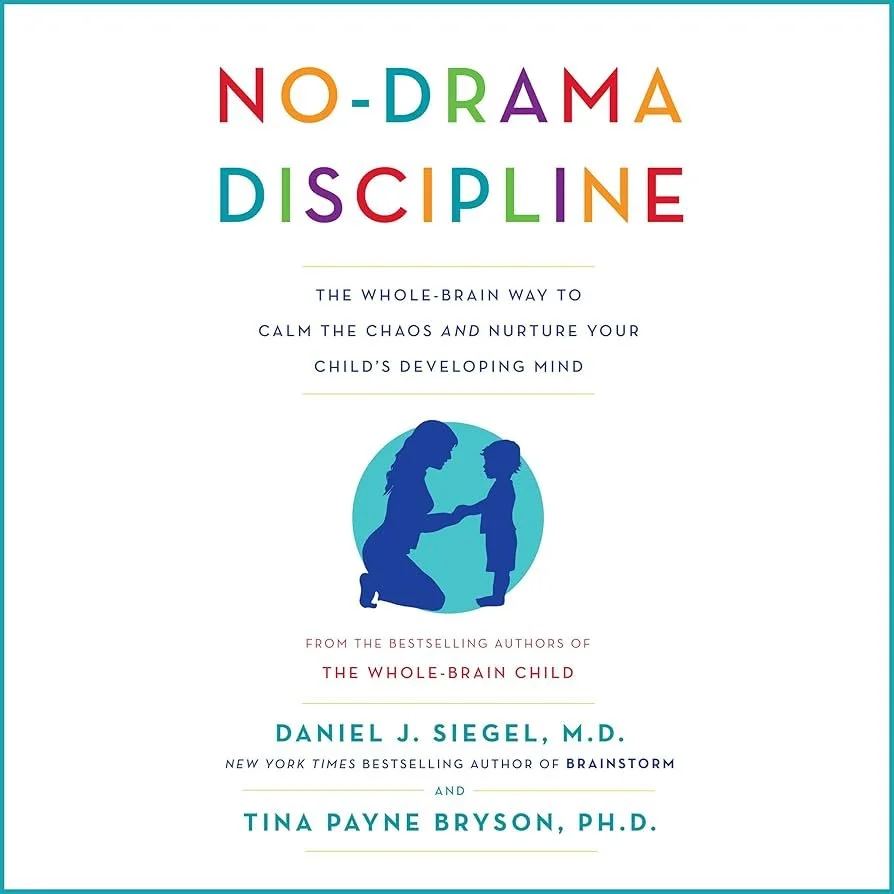
In their widely respected parenting book, No-Drama Discipline, authors Daniel J. Siegel and Tina Payne Bryson offer a different perspective. Discipline, they argue, is not primarily about punishment or control. Its real purpose is to teach children the skills they need to manage themselves, understand others, and make better choices over time.
Their central message can be summarized in a simple phrase: connect and redirect.
This approach aligns closely with principles used in play therapy, child counseling, and relationship-based parenting, where the adult–child relationship is the foundation for learning and behavioral change.
Rethinking What Discipline Means
Siegel and Bryson define discipline in its original sense, which comes from the word disciple. The goal is not to punish a child but to teach and guide them toward better decisions.
Children misbehave for many reasons. They may feel overwhelmed by emotion, lack impulse control, or simply not yet have the developmental skills needed to respond differently.
When adults focus only on stopping the behavior, the deeper lesson can be lost. But when discipline becomes a teaching moment, children gain something far more valuable than short-term compliance.
They begin to build self-awareness, empathy, and self-regulation.
Why Connection Comes First
One of the most important ideas in No-Drama Discipline is that children cannot learn when they are emotionally overwhelmed. In other words, when a child is drowning, it is not the time to teach them to swim.
When a child is having a meltdown, their brain is essentially in survival mode. In those moments, reasoning, lecturing, or consequences are unlikely to be effective because the child is not in a state where learning can occur.
Instead, Siegel and Bryson recommend starting with connection.
Connection might look like:
A calm voice
Getting down to the child’s level
Acknowledging their feelings
Offering reassurance and presence (which may or may not include gentle physical touch)
This does not mean ignoring behavior or allowing children to do whatever they want. It means helping them regulate emotionally first, so they can then process what happened and learn from it.
In other words, before we correct behavior, we calm the nervous system.
Saying Yes to Feelings and No to Behavior
A key theme of the book is that children’s feelings are always valid, even when their behavior is not.
For example, a child might feel angry that a sibling took a toy. That anger is real and understandable. But hitting the sibling is not acceptable.
When parents acknowledge the emotion while still setting a limit on the behavior, children learn two important lessons at the same time:
My feelings make sense
My actions still matter
This balance helps children learn how to express strong emotions safely instead of suppressing or exploding them.
Connect First, Then Redirect
Once connection has helped the child calm down, the next step is redirection.
Redirection might involve:
Talking through what happened
Helping the child think about different choices
Encouraging them to repair a mistake
Practicing a better response for the future
This stage helps children develop skills like problem solving, empathy, and accountability.
Instead of simply hearing “Don’t do that,” children begin to understand why a behavior matters and what they can do differently next time.
Why This Approach Matters for Brain Development
One of the strengths of No-Drama Discipline is that it connects parenting strategies with neuroscience.
Siegel, a psychiatrist known for his work in interpersonal neurobiology, explains how supportive discipline helps children build brain pathways related to emotional regulation, empathy, and decision making.
When parents consistently respond with connection first, children’s brains gradually develop stronger abilities to manage frustration, delay impulses, and consider the impact of their actions.
Over time, this approach supports long-term emotional intelligence and resilience.
What Parents Often Notice
Parents who begin practicing connection-based discipline often notice several shifts:
Fewer escalating power struggles
Children calming down more quickly
More cooperation after emotional moments
Greater trust in the parent–child relationship
Discipline becomes less about control and more about guidance and growth.
A Practical and Compassionate Parenting Framework
For parents who want discipline strategies that are both firm and compassionate, No-Drama Discipline offers a practical roadmap.
Its central message is simple but powerful: children learn best when they feel safe, understood, and supported.
By connecting first and redirecting second, parents can transform difficult moments into opportunities for teaching, relationship building, and emotional development.
Families who struggle with frequent power struggles, emotional outbursts, or behavioral challenges may also benefit from working with a child therapist or play therapist in San Luis Obispo, where children can learn emotional regulation and problem-solving skills in a supportive environment.
Sometimes the most effective discipline is not louder, stricter, or more controlling.
Sometimes it simply starts with connection.
Visit Dr. Siegel’s website for places to buy this book and even more resources: https://drdansiegel.com/book/no-drama-discipline/
References
Siegel, D. J., & Bryson, T. P. (2014). No-drama discipline: The whole-brain way to calm the chaos and nurture your child’s developing mind. Bantam Books.
Siegel, D. J., & Bryson, T. P. (2012). The whole-brain child: 12 revolutionary strategies to nurture your child’s developing mind. Delacorte Press.
Landreth, G. L. (2012). Play therapy: The art of the relationship (3rd ed.). Routledge.
Bratton, S. C., Ray, D. C., Rhine, T., & Jones, L. (2005). The efficacy of play therapy with children: A meta-analytic review of treatment outcomes. Professional Psychology: Research and Practice, 36(4), 376–390. https://doi.org/10.1037/0735-7028.36.4.376