When Kids Break Things
Understanding destruction, aggression, and the urge to take things apart
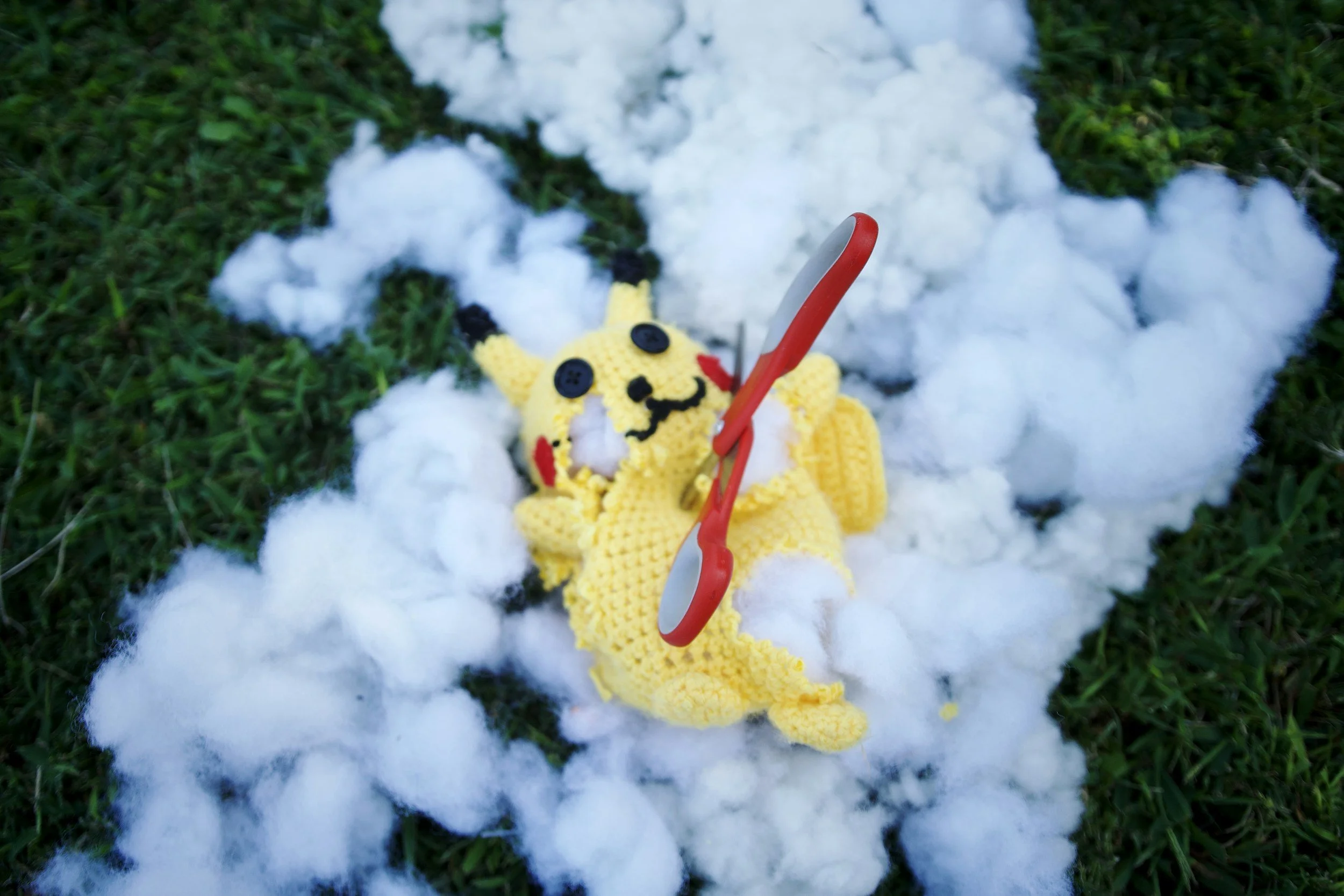
You walk into the room and discover that your child has taken apart something that definitely was not meant to be taken apart. Or maybe they got angry and threw a toy against the wall. They ripped up the picture they had just spent twenty minutes drawing. They built an elaborate Lego tower for the sole purpose of smashing it to pieces. Maybe you have a child who seems fascinated by breaking, crushing, dismantling, or destroying things, and you find yourself wondering, Why do they keep doing this?
As adults, we tend to look at the finished product. Something was intact, and now it is broken. Usually, this creates more work for us and sometimes costs us money, so it is understandable that our first reaction might be frustration. But children break things for a lot of different reasons. Sometimes they are angry. Sometimes they are curious. Sometimes their impulse to do something happens much faster than their ability to think through what will happen afterward. And sometimes destruction itself is an important part of how children play.
As a child therapist and play therapist in San Luis Obispo, I am often less interested in the fact that a child broke something than I am in what was happening before, during, and after they broke it.
Start With What Happened
Imagine two children who both break a toy. The first child is furious because their sibling won't give them something they want. They grab the nearest toy and throw it as hard as they can. The second child is sitting quietly on the floor with a toy car. They turn it over, examine the wheels, pull at one of them, and eventually manage to pry it off. They seem genuinely fascinated by what they find underneath.
The outcome is the same. We now have a broken toy. But these children are not engaging in the same behavior. One child may be struggling with impulse control and emotional regulation. The other might be experimenting with cause and effect and trying to understand how something works.
This is why context matters so much when we are trying to understand children's behavior. Before assuming that your child is being destructive, it can help to think about what seemed to be happening immediately before the behavior. Were they angry? Bored? Excited? Curious? Were they deeply engaged in play? Did they seem surprised when the object actually broke? The answers can give us a much better idea of what our child might need from us next.
“I Wanted to See”
Children are little scientists. They spend a huge amount of childhood running experiments on the world around them. What happens if I pour this into that? How high can I build this before it falls? What is inside this toy? What happens if I bend this farther?
Unfortunately for parents, some experiments are expensive.
Young children especially may understand that they are doing something without being particularly good at predicting the eventual outcome. Their brains are still developing the skills involved in impulse control, planning, cause and effect, and considering consequences. Your child might genuinely want to know whether the plastic piece bends without fully thinking through the possibility that it will snap.
This doesn't mean they should be allowed to dismantle the television because they are curious about what's inside. Children still need limits. But understanding that the behavior came from curiosity rather than malice changes how we might respond to it. You might say, “You really wanted to see what was inside, and this isn't something for taking apart.” Now we can redirect that curiosity toward something they can dismantle rather than treating their curiosity itself as the problem.
When Anger Comes Out Through the Body
Other times, breaking something is much more clearly connected to anger. Adults sometimes forget just how physical children's emotions can be. When we become angry, hopefully we have enough experience and self-regulation to recognize what is happening, inhibit our first impulse, and choose what to do next. Children are still developing those skills.
For some children, the distance between I am furious and I threw the toy is incredibly short. By the time they are thinking about the consequence, the toy may already be broken. This is where it is important to separate the feeling from the behavior.
A child is allowed to be angry. They are allowed to hate what happened. They are even allowed to want to smash something into a thousand pieces. That doesn't mean they are allowed to smash your lamp.
In child-centered play therapy, we accept children's feelings while setting limits on behaviors that are unsafe or destructive. A limit might sound something like, “You're really angry with me, but I'm not for hitting. You can choose to hit the punching bag.” The message is not stop being angry. The message is I understand how angry you are, and I am going to help you find a way to express that feeling safely.
Sometimes Breaking Things Is Fun
There is also a much simpler explanation that adults sometimes overlook. Destroying things can be incredibly satisfying. Think about knocking down a tower of blocks, popping bubble wrap, crushing a sandcastle, or jumping into a pile of leaves. There is something enjoyable about creating an effect on the physical world and watching something dramatically change because of what you did.
For children, this can also provide an experience of power. Children spend most of their lives in environments created and controlled by adults. They are constantly being told where to go, what to do, what not to touch, and how things are supposed to work. Then they build a giant block tower and knock the whole thing over.
For one brief moment, they are incredibly powerful. They made it. They destroyed it. And if they want to, they can build it again.
Destruction in the Playroom
Destructive play can also have symbolic meaning. A child might build an entire town and then send a tornado through it. An army might destroy a castle. A dinosaur might stomp through the dollhouse. A character might repeatedly break something and then repair it.
As a play therapist, I wouldn't look at one destroyed Lego building and decide that I know exactly what it means. Play themes have to be understood within the larger context of the child's play, their experiences, and what happens repeatedly over time. But destruction can give children an opportunity to explore ideas around power, control, anger, danger, loss, and rebuilding.
Imagine a child whose life has recently changed in a way they had absolutely no control over. Maybe their parents separated. Maybe they moved. Maybe someone important left their life. Their world changed, and they didn't get a vote. In the playroom, that child may create a world and destroy it. This time, they are the one who gets to decide when the world changes.
They might rebuild it exactly the way it was. They might build something completely different. They might destroy it again. Play gives children a way to experiment with experiences that are difficult to explain in words.
Sometimes what happens after the destruction tells us just as much as the destruction itself. Does your child immediately panic and try to hide what happened? Do they insist someone else did it? Do they become overwhelmed with guilt? Do they calmly move on? Do they try desperately to repair it? A child who accidentally breaks something and immediately becomes terrified may be telling us something about how they experience mistakes. A child who repeatedly tries to repair everything they damage may be working through feelings about responsibility or making things right.
Again, there is no single interpretation. The goal is curiosity.
Limits Still Matter
Understanding behavior doesn't mean allowing everything. If your child intentionally breaks their sibling's belongings when they are angry, that behavior needs a boundary. If they are dismantling expensive household items out of curiosity, they need to learn what they can and cannot take apart.
Child-centered parenting is not permissive parenting. In fact, children often feel safer when limits are predictable. They need to know that the adults around them are capable of keeping themselves, other people, and important things safe. The difference is that we can set those limits without deciding that the behavior tells us something terrible about the child.
“You really wanted to know what would happen if you pulled that apart. The remote isn't for taking apart.”
“You were so angry at your brother that you wanted to break something of his. His things are not for breaking.”
We can understand the impulse while still holding the boundary.
Look Beyond the Broken Thing
If your child breaks something, it is reasonable to be frustrated. Sometimes the natural consequence is that something they wanted is now broken. Sometimes they may need to participate in repairing or replacing something they damaged, depending on their age and the situation.
But before deciding that your child is careless, aggressive, disrespectful, or destructive, slow down long enough to look at what happened. Was this curiosity? Impulsivity? Anger? Play? Was this a child experimenting with what they are capable of doing? Or is there a larger pattern of aggression, emotional dysregulation, or destructive behavior that deserves more attention?
Children are constantly communicating through what they do, even when they don't have the words to explain why they did it. For families looking for a child therapist in San Luis Obispo or parenting support on the Central Coast, child-centered play therapy can provide children with a safe environment to explore aggression, power, control, frustration, and other difficult experiences through play. The play therapist can help put words to what is happening while providing consistent limits that keep the child and the playroom safe.
Sometimes a broken toy is just a broken toy. But if we are willing to get curious before jumping to conclusions, sometimes it can also tell us something important about the child who broke it.
References
Landreth, G. L. (2012). Play Therapy: The Art of the Relationship (3rd ed.). Routledge.
Axline, V. M. (1969). Play Therapy. Ballantine Books.
Ray, D. C. (2011). Advanced Play Therapy: Essential Conditions, Knowledge, and Skills for Child Practice. Routledge.
Bratton, S. C., Landreth, G. L., Kellam, T., & Blackard, S. R. (2006). Child Parent Relationship Therapy (CPRT) Treatment Manual: A 10-Session Filial Therapy Model for Training Parents. Routledge.