Scary Play Is Still Play
Why death, danger, fighting, and disasters show up in children's play
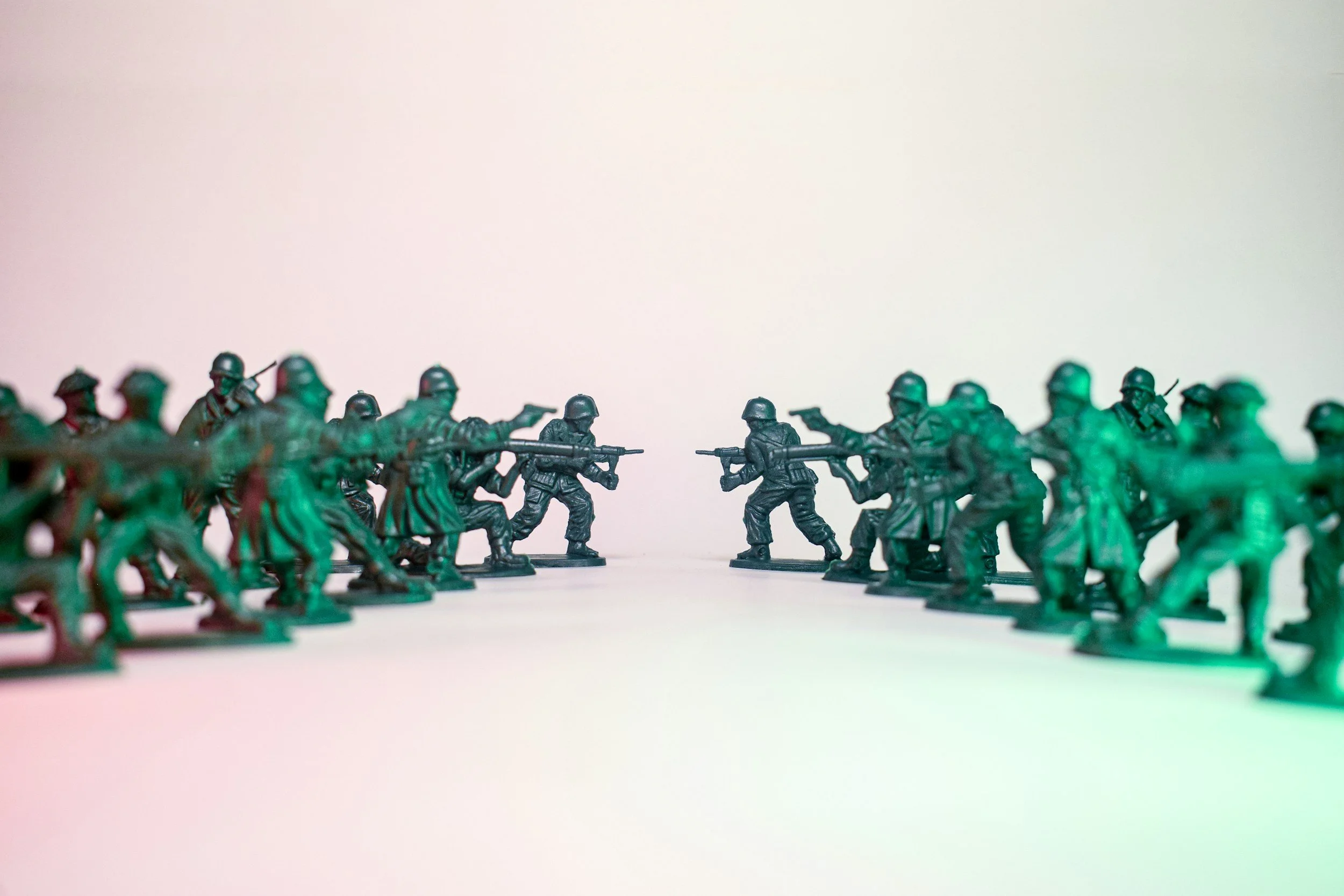
Your child lines up all of their stuffed animals and announces that a tornado is coming and everyone dies. Or maybe the dinosaurs are constantly eating each other. The dolls get kidnapped. The superheroes spend an hour fighting. Someone gets buried alive in the sandbox. The Lego city your child spent twenty minutes carefully constructing gets hit by an earthquake, catches on fire, and is completely destroyed.
For adults, children's play can get surprisingly dark. If you happen to overhear your child enthusiastically describing who died in the latest battle, it is understandable to wonder, Should I be concerned about this?
Usually, the answer is not based on whether something scary happened in the play. Children use play to explore all kinds of ideas, including ideas that make adults uncomfortable. As a child therapist and play therapist in San Luis Obispo, I am much less interested in whether a child played out something violent or frightening once than I am in understanding the larger context of their play. What happened? Who had the power? Who was afraid? What happened after the scary thing occurred? Does this story keep coming back?
Scary play is still communication, and sometimes children need to communicate about scary things.
Play Isn't Always Happy
Adults tend to associate children's play with fun. And, of course, children do play because it is fun. But play is also one of the primary ways children make sense of their experiences and their world.
Children play school after starting kindergarten. They play doctor after going to the doctor. They put stuffed animals to bed, make dolls argue with each other, send toy cars crashing into walls, and create families that separate and reunite. Through play, children get to take experiences and ideas that are complicated, confusing, exciting, or frightening and do something with them.
This is especially important because children don't always have the language or cognitive capacity to sit down and explain what is happening internally. A six-year-old probably isn't going to come home and say, “I've been thinking a lot about the fact that bad things can happen unexpectedly, and I'm struggling with how little control I have over that possibility.”
They might, however, send a tornado through the dollhouse.
Children live in the same world we do, and they are exposed to frightening ideas much earlier than adults sometimes realize. They experience death. They hear adults talking about fires, shootings, wars, car accidents, and natural disasters. They see villains in movies and hear stories about people getting hurt. They experience illnesses, injuries, divorce, moves, and people leaving their lives. Even when adults try very hard to protect children from frightening information, children are remarkably good at noticing that something is happening, even when they don't fully understand what it means.
And not understanding can sometimes make something even scarier. Play gives children a way to take these enormous concepts and shrink them down to a size they can actually manipulate. A tornado in the real world is completely outside of a child's control. A tornado in the playroom can be picked up with one hand.
Playing With Power
A lot of scary play involves power. There is a monster chasing everyone. A dinosaur destroys the town. The bad guy captures the good guy. A huge storm wipes out an entire city. Sometimes the child is the person in danger, but sometimes the child is the tornado.
This can be uncomfortable for adults to watch because we tend to want children to identify with the good, kind, helpful character. If a child repeatedly chooses to be the villain, we might start wondering what that says about them. But children experiment with different roles through play. A child who feels small and powerless in much of their everyday life may be very interested in what it feels like to be enormous and terrifying. A child who is afraid of something may experiment with becoming the frightening thing instead of being frightened by it.
This does not necessarily mean they want to hurt someone in real life. It may simply mean they are asking, through play, What does it feel like to have all the power?
There is another interesting thing children can do in play. They can make the scary thing happen on purpose. Imagine a child who has experienced something unexpected and frightening. One of the hardest parts of that experience may have been having absolutely no control over when it happened or what happened next.
In play, the child gets to decide. The earthquake happens because they say it happens. The parent leaves because the child sends the parent away. The monster appears because the child puts it there. Then the child gets to decide what happens next. Maybe everyone dies. Maybe the firefighters come. Maybe the monster gets trapped in a cage. Maybe the town gets rebuilt. Maybe nothing gets fixed at all.
The child can repeat the story, change it, abandon it, or completely rewrite the ending. This ability to control and manipulate an experience is one of the reasons play can be such a powerful way for children to process things that otherwise feel overwhelming.
Don't Interpret One Scene
When parents learn that play can communicate something about a child's emotional world, there can be a temptation to start analyzing everything.
My child buried the dad doll. What does that mean?
Maybe something. Maybe nothing.
A single moment of play rarely gives us enough information to make a meaningful interpretation. In child-centered play therapy, we look for patterns. We pay attention to themes that repeat, how those themes change over time, which characters consistently hold certain roles, and what emotions seem to accompany the play.
Even then, we need to be careful. A child repeatedly building walls might be exploring safety and protection. They might also just really enjoy building walls. The child gets to determine the meaning of their play. My job as the therapist is not to sit across the room secretly translating every dinosaur attack into a hidden psychological message.
Instead, I stay with the child's experience. I might say, “The dinosaur is destroying EVERYTHING!” or “Nobody can stop him!” If a child has carefully contained a monster, I might observe, “You made sure there was no way for that monster to get out.” By putting words to the actions and emotions of the play, I help the child understand and organize what they are expressing without telling them what their play is supposed to mean.
Aggression Is Part of Play
Aggression is a normal part of children's play. Children fight imaginary battles, crash cars, shoot pretend weapons, defeat villains, wrestle, destroy buildings, and dramatically kill characters only to bring them back to life thirty seconds later. Pretend aggression gives children an opportunity to experiment with anger, strength, competition, danger, vulnerability, and control.
That doesn't mean there are no limits. Child-centered play therapy is not a free-for-all. Children can express enormous amounts of anger and aggression while the play therapist maintains boundaries around safety and destruction. A child can pretend the therapist is a dragon that needs to be defeated, but they cannot actually hurt the therapist.
This distinction is important both in the playroom and at home. A child can be furious. They can want to hit something. They can imagine all sorts of aggressive things. We can accept those feelings and impulses without allowing children to do whatever they want because they are angry.
Adults are also incredibly tempted to repair children's play. If the doll family is fighting, we want them to work it out. If someone gets hurt, we want the doctor to arrive. If the villain wins, we might encourage the superhero to try again.
We like resolution. Children don't always need it.
Sometimes the town stays destroyed. Sometimes nobody gets rescued. Sometimes the bad guy wins. If we immediately introduce a happier ending, we may accidentally communicate that the child's version of the story is too uncomfortable for us to tolerate.
One of the most important things I can communicate to a child in the playroom is that they don't have to protect me from what they need to express. I can handle the angry dinosaur. I can handle the destroyed town. I can handle the family that doesn't get back together. When adults can stay present without immediately trying to make the story less scary, children have the freedom to take the play wherever they need it to go.
When Should You Be Concerned?
Scary play by itself is not necessarily a sign that something is wrong. Context matters.
I would be more interested in whether there have been significant changes in the child's behavior outside of play. Are they suddenly having nightmares? Are they becoming unusually aggressive with other children? Are they avoiding things they previously enjoyed? Have there been major changes in sleep, school functioning, separation, or mood? I would also pay attention to whether the play seems flexible. Can the child move between different types of play, or do they seem stuck in the same highly distressed scenario again and again?
And, of course, if a child's play or statements raise concerns about their safety or suggest that they may have experienced something harmful, that deserves additional attention. The important thing is not to panic simply because a child played something that made an adult uncomfortable.
Let Play Do Its Job
Being a child means encountering an enormous world with a brain that is still developing and relatively little control over what happens. There are a lot of things to figure out. What happens when someone leaves? What does it mean when someone dies? What happens when I'm angry? Can bad things happen to good people? Who protects me? What happens if nobody comes to help? What would it feel like if I were the powerful one?
Adults still struggle with many of these questions. Children just tend to ask them with dinosaurs.
In child-centered play therapy, children are given the time, tools, relationship, and freedom to explore these ideas at their own pace. The play therapist does not force the child to talk about difficult experiences or decide what their play means for them. Instead, we trust that children will move toward what they need to work through when they feel safe enough to do so.
For families looking for a child therapist in San Luis Obispo or parenting support on the Central Coast, scary or aggressive play does not automatically mean something is wrong with your child. Sometimes children need a safe place to explore the frightening parts of being human, and sometimes that involves destroying the entire town.
References
Landreth, G. L. (2012). Play Therapy: The Art of the Relationship (3rd ed.). Routledge.
Axline, V. M. (1969). Play Therapy. Ballantine Books.
Ray, D. C. (2011). Advanced Play Therapy: Essential Conditions, Knowledge, and Skills for Child Practice. Routledge.
Bratton, S. C., Landreth, G. L., Kellam, T., & Blackard, S. R. (2006). Child Parent Relationship Therapy (CPRT) Treatment Manual: A 10-Session Filial Therapy Model for Training Parents. Routledge.
Russ, S. W. (2004). Play in Child Development and Psychotherapy: Toward Empirically Supported Practice. Lawrence Erlbaum Associates.