Play Therapy at Home—Encouragement
Building Confidence That Comes From Within
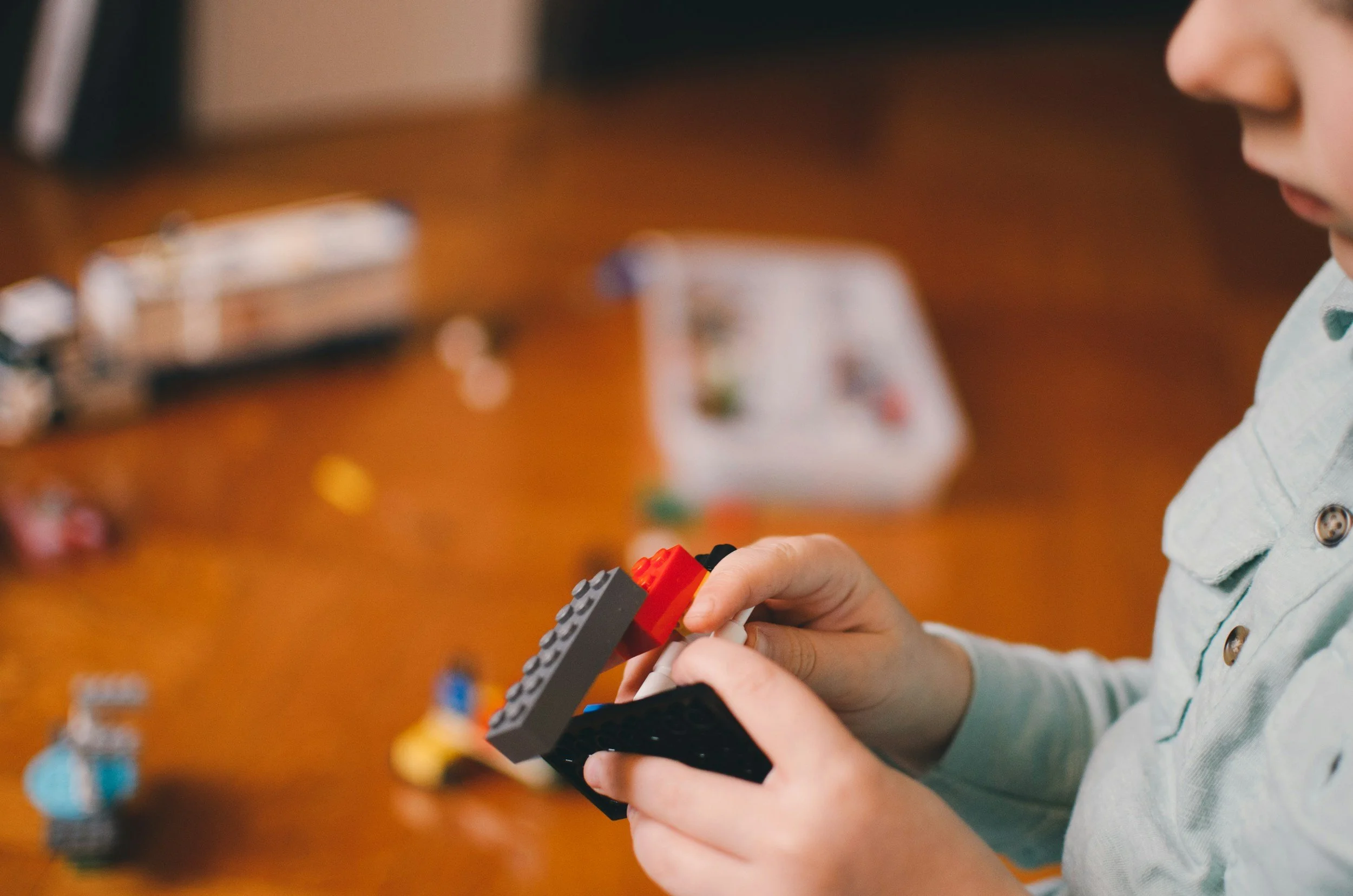
When children are learning something new, struggling with a task, or pushing through frustration, many parents naturally respond with praise.
“Good job.”
“You’re so smart.”
“I’m proud of you.”
“That’s amazing!”
These responses are warm, loving, and often automatic. Most parents are trying to help their child feel confident and valued.
But in Child-Centered Play Therapy, we use a different tool to build confidence.
We use encouragement.
Encouragement helps children develop something deeper than momentary confidence. It helps them build an internal belief in their own capability.
What Is Encouragement?
Encouragement is a way of responding to children that focuses on:
Effort
Persistence
Problem-solving
Process rather than outcome
Internal experience rather than external judgment
Instead of evaluating what a child has done, encouragement reflects what the child is doing and experiencing.
For example:
“You kept trying even when it got tricky.”
“You found another way to solve it.”
“You worked on that for a long time.”
“You figured out how to make it stand up.”
“You are really proud of what you did.”
“You stuck with that even when it didn’t work at first.”
In Child-Centered Play Therapy, encouragement is one of the core therapeutic skills because it directly supports a child’s developing sense of self-worth and competence.
As highlighted in play therapy literature and training, encouragement is not just the words you use with your child. It is a relational stance that helps children internalize a sense of capability rather than relying on external approval. Research and clinical models of Child-Centered Play Therapy and Child Parent Relationship Therapy (CPRT) consistently emphasize encouragement as central to building self-esteem and resilience in children.
Praise vs Encouragement: Why It Matters
At first glance, praise and encouragement can sound similar. But they function very differently in a child’s emotional development.
Praise evaluates the child and is focused on the outcome.
Encouragement notices the child and is focused on the process.
Praise often focuses on the outcome:
“Good job drawing that picture.”
“You’re so good at puzzles.”
“That’s perfect.”
Praise uses evaluation or judgement based words. A judgement word is any word that can have an opposite (e.g. “good” vs “bad,” “pretty” vs “ugly,” “best” vs “worst”).
Encouragement focuses on effort and process:
“You chose a lot of different colors.”
“You kept working until it fit.”
“You tried different ways until it worked.”
Over time, praise can unintentionally create dependence on external validation. Children may begin to look outward for approval rather than inward for a sense of satisfaction or pride. This can turn into perfectionism, over-achieving, and people pleasing tendencies.
Encouragement supports an internal locus of control. Children begin to notice:
What they tried
What worked
How they solved problems
How they kept going
This is one of the key “pillars” described in play therapy parenting education: helping children build internal motivation, self-awareness, and emotional resilience through relationship-based responses rather than performance-based feedback. And over time, as children increase their abilities and build competence, they naturally begin to feel more confident! This sense of confidence helps them tackle bigger challenges and strengthens resilience. And as they face these challenges and learn even more, they become more competent. Over time, confidence and competence create a sort of positive feedback loop, that helps your child build self-worth while building their skills and abilities.
Encouragement Builds Emotional and Behavioral Strength
Encouragement is not only about confidence. It also supports emotional regulation and frustration tolerance.
When a child is building a block tower and it falls, the moment can feel big in their world. A praising response might redirect quickly or minimize the feeling.
An encouraging response might sound like:
“That fell down. You’re figuring out how to make it stand.”
“You’re trying again after it didn’t work.”
“You’re working through something hard right now.”
In Child-Centered Play Therapy, we see this same process in the playroom. Children are supported in experiencing challenge, frustration, and success within a safe relationship. Over time, they develop the ability to tolerate difficulty and return to regulation without needing adults to fix or rescue the experience.
Encouragement at home mirrors this process.
Encouragement in Everyday Parenting Moments
Encouragement does not require special situations or structured activities. It works best in everyday moments:
When your child is building or creating
“You’re testing different ways to make that work.”
“You decided to add another piece.”
“You’re really focused on that.”
When your child is struggling
“You’re sticking with this even though it’s hard.”
“You haven’t given up yet.”
“You’re trying again.”
When your child is playing
“You’re making the characters go on an adventure.”
“You came up with a new idea for the story.”
“You’re really into this right now.”
The goal is not to constantly talk. It is to notice and occasionally reflect what you see in a way that communicates presence and belief in your child’s capability.
What Encouragement Is Not
Encouragement is not:
Fixing the problem
Directing the outcome
Teaching a lesson in the moment
Overloading with verbal feedback
It is also not “creative praise” disguised as encouragement (for example, “That’s the best drawing I’ve ever seen!” still centers evaluation).
Instead, encouragement stays grounded in observation and effort.
Why This Works
Child-Centered Play Therapy operates from the understanding that children develop self-esteem most effectively when they internalize their own sense of competence rather than relying on external approval.
Encouragement helps children begin to build answers to questions like:
“Can I do hard things?”
“What happens when I fail?”
“Do I keep trying?”
“Do I trust my own effort?”
Over time, children who are consistently encouraged tend to show:
Greater persistence
More flexibility when solving problems
Stronger frustration tolerance
Increased self-confidence rooted in experience rather than praise
This aligns with the broader Child-Centered Play Therapy framework, which emphasizes relationship, acceptance, and the child’s innate capacity for growth when given the right emotional environment.
A Simple Practice for This Week
Try this:
Once a day, replace praise with encouragement.
Instead of evaluating the outcome, notice the process.
You might simply say:
“You worked hard on that.”
“You kept going.”
“You figured it out.”
“You tried again.”
You do not need to get it perfect. This is not about saying the “right” thing. It is about shifting attention toward your child’s effort and experience.
Coming Next in the Play Therapy at Home Series
Next, we’ll explore Offering Choices, and how small opportunities for decision-making help children build autonomy, responsibility, and confidence within safe limits
Play Therapy at Home Series
Practical parenting tools inspired by Child-Centered Play Therapy
While parents are not expected to become play therapists, many of the skills used in Child-Centered Play Therapy can strengthen relationships, improve communication, and support children's emotional development at home. In this series, we'll explore practical tools that parents can use in everyday interactions with their children. Each skill is simple to learn but can have a powerful impact on connection, confidence, emotional regulation, and resilience.
References (APA)
Bratton, S. C., Landreth, G. L., Kellam, T., & Blackard, S. R. (2006). Child parent relationship therapy (CPRT): An evidence-based 10-session filial therapy model. Routledge.
Cochran, N. H., Nordling, W. J., & Cochran, J. L. (2010). Child-centered play therapy. Wiley.
Hicks, B. (2025). Art of the session: Encouragement and esteem building—helping kids believe they’re capable [Podcast episode]. Play Therapy Podcast. https://www.playtherapypodcast.com/art-of-the-session-encouragement-and-esteem-building-helping-kids-believe-theyre-capable/
Landreth, G. L. (2012). Play therapy: The art of the relationship (3rd ed.). Routledge.
Ray, D. C. (2011). Advanced play therapy: Essential conditions, knowledge, and skills for child practice. Routledge.
VanFleet, R., Sywulak, A. E., & Sniscak, C. C. (2010). Child-centered play therapy. Guilford Press.
Play Therapy Parenting. (n.d.). The four pillars of play therapy. https://www.playtherapyparenting.com/the-four-pillars-of-play-therapy/