How to Prepare Your Child for Play Therapy and What Parents Can Expect
Starting therapy can feel like a big step, especially when it's your child's first experience working with a therapist. Parents often have questions about how to explain therapy to their child, what actually happens during a play session, and how they can support the process at home.
One of the things I encourage parents to remember is that child-centered play therapy (CCPT) looks quite different from what most adults imagine when they think about therapy. Children aren't expected to sit on a couch and talk about their feelings, answer questions about their behavior, or explain why they're having a difficult time. Instead, they have the opportunity to express themselves through play, using toys and materials in a specially designed playroom.
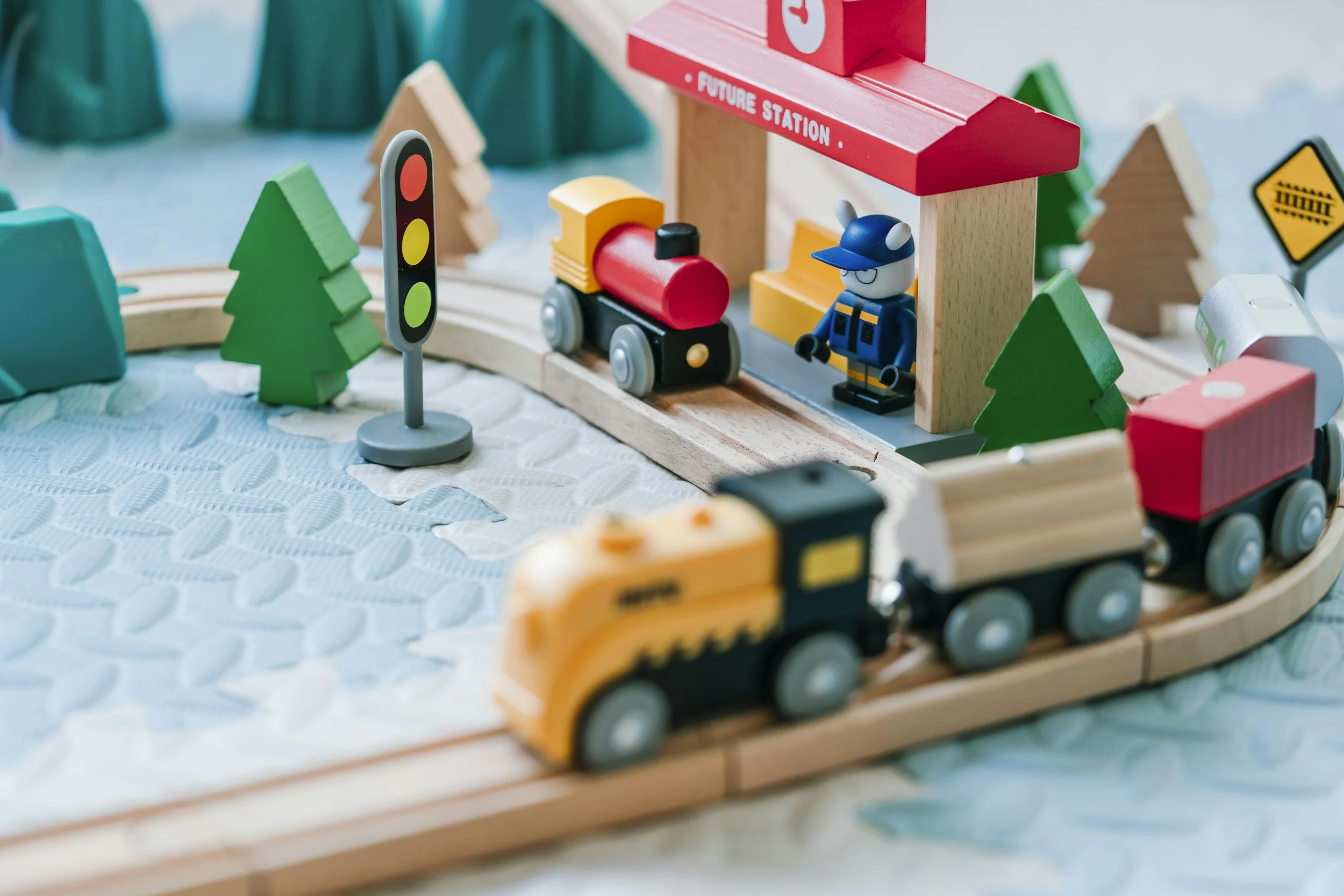
Play is a child's natural language, and toys are their words. Just as an adult might use a therapy session to talk through difficult experiences, children use play to explore their feelings, experiment with different roles, work through challenges, and develop a greater understanding of themselves.
Because this approach is child-led, there are a few things parents can do before and after sessions to help children feel comfortable and get the most out of their experience.
How to Explain Play Therapy to Your Child
One of the most common questions I receive from parents is, “What should I tell my child about why they're coming to therapy?”
My recommendation is to keep the explanation simple, positive, and consistent with what your child will actually experience.
You might say:
“I talked to a lady named Sara (or Miss Sara). I really like her and I think you will too. You're going to go and play with her in a special playroom for 50 minutes.”
Or, if both parents are involved:
“Me and your mom/dad talked to a lady named Sara (or Miss Sara). We really like her and we think you will too. You're going to go and play with her in a special playroom for 50 minutes.”
You can also mention that the special playroom has lots of different toys.
That's really all most children need to know.
It isn't especially important that children understand they're going to therapy, because most young children don't have a meaningful frame of reference for what that word means. What matters more is that the explanation accurately prepares them for the experience they're about to have.
I also encourage parents to avoid telling children that I'm going to ask them questions, talk to them about their feelings, or help them with a particular problem.
For example, a parent might be tempted to say, “You're going to see Miss Sara, and she's going to help you learn how to handle your anger.”
While that may reflect one of the parent's hopes for treatment, it can create expectations that don't align with how child-centered play therapy actually works.
I don't ask children to talk about particular experiences or direct them toward specific feelings or problems. Children decide what they want to play, how they want to play, and what they want to share.
When children arrive believing they're expected to discuss something uncomfortable, explain their behavior, or demonstrate that they're working on a particular problem, they may become defensive or suspicious of the process.
I want children to experience the playroom as a place where they are accepted and trusted to lead.
What Should You Call Their Sessions?
Parents sometimes refer to therapy as a class or describe me as a teacher. Although these descriptions are usually well-intentioned, they can create confusion about what children should expect.
A teacher is generally responsible for providing instruction, directing activities, and helping students learn particular skills. That's not my role in the playroom.
I'm not there to teach children how to play, tell them what to do, or evaluate whether they're doing something correctly.
Instead, I follow their lead, reflect their feelings, track their behavior, and support their ability to make choices and take responsibility within the limits of the therapeutic relationship.
Some families find it helpful to develop a simple name for their child's sessions, such as “your playtime,” “your special playtime,” “your time with Sara,” or even “your Sara day.”
The particular name isn't especially important. What's important is that it accurately describes the child's experience without creating expectations about what they're supposed to accomplish.
If an older child asks directly whether they're going to therapy or why they're attending, parents should answer honestly in developmentally appropriate language. There's no need to conceal that they're seeing a therapist. The goal is simply to avoid placing unnecessary expectations on the child before they've had an opportunity to experience the playroom for themselves.
What to Expect During a Play Session
My playroom is designed to give children opportunities to explore a wide range of feelings, experiences, and relationships through play.
That means there are toys for nurturing and caregiving, toys for expressing anger or aggression, materials for creative expression, and opportunities for children to experiment with power, control, problem-solving, and responsibility.
Some children spend their time creating elaborate stories with dolls or miniature figures. Others build things, paint, dress up, engage in pretend battles, or experiment with the different materials available to them.
And sometimes, the playroom gets very loud.
Children may yell, roar, bang on drums, crash toy cars into one another, or become deeply involved in an imaginary battle. They might spend an entire session pretending to be a baby, caring for stuffed animals, or repeatedly building and destroying the same structure.
If you're sitting in the adjacent waiting room, you may hear some of this activity through the walls. That's perfectly normal, and I encourage parents to refrain from commenting on the noises they hear, either during or after the session.
Even a seemingly harmless comment like, “Wow, it sounded like you were having a lot of fun in there!” or “I heard some pretty loud banging!” can unintentionally influence how a child approaches their playtime. Children are naturally attentive to their parents' reactions, and knowing that a particular activity caught your attention may encourage them to repeat it or play in ways designed to elicit a response.
I want children to feel free to explore the playroom without worrying about how their play might be perceived by someone outside the room. Their choices about what and how to play should come from their own interests, feelings, and needs, rather than a desire to entertain, impress, or provoke a reaction from their parents.
These experiences are all part of the range of play that may occur in child-centered play therapy.
I don't interpret a particular toy or activity as having one fixed meaning. A child pretending to fight doesn't necessarily mean they're angry, and a child caring for a baby doll doesn't necessarily mean they're processing a particular family relationship.
Instead, I pay attention to the child's emotional experience, the patterns that emerge over time, and how they use the freedom and safety of the playroom.
Although children have considerable freedom to direct their play, there are still clear and consistent limits around safety. I maintain responsibility for protecting the child, myself, and the playroom while allowing as much freedom as possible within those boundaries.
Dress for Play, Not for School Pictures
One practical recommendation I give parents is to send children to their sessions in clothes that can get dirty.
The playroom has art supplies, sensory materials, and plenty of opportunities for creative experimentation. Children may paint, work with play-doh, use water, or become so involved in their activities that keeping their clothing clean isn't particularly high on their list of priorities.
While I take reasonable precautions, I don't want children to feel preoccupied with protecting a favorite outfit or worried that they're going to get in trouble if they accidentally get paint on their sleeves.
Comfortable play clothes are ideal.
It's also helpful to have your child use the restroom before their session begins, whenever possible. Sessions last 50 minutes, and taking care of bathroom needs beforehand can help children enjoy their playtime without unnecessary interruptions.
What Happens During the First Session?
During a child's first session, I spend some time introducing them to the playroom and explaining what they can expect from our time together.
I also review important information about therapy in language appropriate to the child's developmental level. This includes discussing privacy and confidentiality, the circumstances in which I may need to share information to keep someone safe, and the fact that I meet periodically with parents for check-ins.
Children deserve to understand the nature of the relationship they're entering, including the limits of confidentiality. I want them to know that their playtime is their own while also being transparent about my responsibilities as their therapist.
I also explain that they are not responsible for cleaning up the playroom.
In fact, I tell children, “It's your job to play, and it's my job to clean up.”
This may sound like a small detail, but it's an important part of how the playroom works.
Why Children Don't Have to Clean Up
Many children have learned that whenever they finish playing, they're expected to put everything back where it belongs. That's a perfectly reasonable expectation in most homes and classrooms.
But the playroom is different.
For some children, the expectation that they'll eventually need to clean up can interfere with their willingness to explore. They may avoid getting materials out, worry about making a mess, or become preoccupied with how much work they'll have to do before they leave.
I don't want children spending their playtime worrying about if they’ll have enough time to clean up.
There's also a deeper reason behind this approach.
If play is a child's language and toys are their words, then the playroom is a space where children communicate through the things they create, arrange, destroy, and leave behind.
Imagine asking an adult at the end of a therapy session to take everything they've shared, organize it neatly, and stuff it all back into a box before they leave.
That would feel a little strange, wouldn't it?
When children leave the playroom, they can trust that I will take responsibility for the space and everything they've expressed within it. They don't have to undo their play or restore everything to its original condition before their time is over.
I think this is one of the many ways the therapeutic relationship communicates acceptance and builds trust.
Of course, some children genuinely enjoy cleaning or organizing. If a child chooses to put toys away as part of their play, that's perfectly fine. The important distinction is that cleaning up isn't something I require of them.
Some parents may worry that child not having to clean up in the playroom, might lead them to believe that they never have to clean up after themselves. However, children are smart and the intuitively understand that different environments and situations come with different sets of expectations. Children come to know that the playroom is a different and special place with its own special set of “rules.”
What If My Child Is Shy or Doesn't Want to Go In?
It's not unusual for children to feel hesitant about entering the playroom, particularly during their first session.
They're meeting a new adult, entering an unfamiliar environment, and being asked to separate from their parent or caregiver. Even children who are generally outgoing may need some time to become comfortable.
I don't interpret hesitation as a sign that a child isn't ready for therapy or that they're being uncooperative.
Building trust is part of the therapeutic process, and children develop that trust at their own pace.
If a child is particularly reluctant to separate, I may invite their parent to come into the playroom with us for a little while so the child can look around and become familiar with the space.
If I do invite you into the playroom, the most helpful thing you can do is remain relatively neutral and allow your child to explore at their own pace.
Try to avoid directing them toward particular toys, encouraging them to interact with me, or reassuring them repeatedly that they're going to have fun.
For example, it's understandable to want to say, “Look at all these toys! Why don't you show Miss Sara how you play with the dinosaurs?”
But remember that one of the central goals of child-centered play therapy is to give children the freedom to make their own choices.
Your child doesn't need to demonstrate that they're having a good time, and they don't need to interact with me in a particular way to make the session successful.
Sometimes simply watching, looking around, or remaining close to a parent is what a child needs initially.
As they become more comfortable, I may begin helping them transition toward having their playtime independently. For example, I might offer the child a choice about whether they'd like the playroom door to remain open or closed while their parent waits in the waiting room.
This gives the child some control over the transition while maintaining the expectation that their playtime will eventually take place without their parent in the room.
The specific approach depends on the child's needs and how they're responding. I don't want a child's first experience of the playroom to become a struggle over whether they're willing to separate from their parent.
The relationship comes first. I truly want children to. understand that I respect them, their needs, and their choices.
What Should Parents Do After a Session?
One of the most helpful things parents can do after play therapy is resist the urge to ask lots of questions.
I know this can be difficult. Parents are naturally curious about what their child did, whether they enjoyed themselves, and whether therapy is helping.
You might want to ask, “What did you play with today?” or “Did you talk to Sara about what happened at school?” or “What did you learn?”
But these questions can unintentionally create pressure for children to explain or account for what happened during their playtime.
Remember that children aren't necessarily using their sessions to discuss particular problems or practice skills they can describe afterward.
Sometimes the most meaningful experiences in play therapy are ones children don't have the language to explain, or simply don't feel inclined to talk about.
And that's okay.
Instead of asking for a report about the session, I encourage parents to make a simple, neutral statement.
“I hope you had a nice time playing.”
Then leave it there.
If your child wants to tell you about what happened, wonderful! Listen attentively, show interest, and reflect what they're sharing.
Maybe they tell you that they built an enormous tower and knocked it over.
“You built a really big tower, and then you knocked the whole thing down!”
Perhaps they tell you that they got to pretend to be a superhero.
“You got to be the superhero today!”
There's no need to ask what the play meant, whether they talked about their feelings, or why they chose a particular activity.
Just enjoy hearing about their experience.
And if they don't want to share anything, that's perfectly fine, too.
Their playtime belongs to them.
What If My Child Brings Something Home?
Children sometimes make drawings, paintings, or other creations during their sessions and choose to bring them home.
When this happens, parents often respond with enthusiastic praise.
“Wow! That's beautiful!”
“You're such a good artist!”
“I love it!”
These responses are certainly well-intentioned, but I encourage parents to consider a slightly different approach.
In child-centered play therapy, I avoid evaluating children's creations as good, bad, beautiful, impressive, or otherwise worthy of approval. The goal is to help children develop their own sense of satisfaction and confidence rather than relying on an adult to tell them whether they've done something well.
Parents can support this by responding with curiosity and neutral observations.
“You made something!”
“You used a lot of different colors.”
“I wonder if you'd like to tell me about it.”
If your child wants to explain what they've made, listen. If they don't, there's no need to press them.
Sometimes children are very proud of their creations. Other times, the process of making something was far more important than the finished product.
Allowing children to decide what their creations mean and how they feel about them helps reinforce the sense of autonomy and self-confidence we're working to develop in the playroom.
Talking About Your Child's Progress
Another important part of preparing for play therapy is understanding how communication between parents and the therapist works.
I meet with parents periodically for parent check-ins, typically after every five child sessions. These meetings provide an opportunity to discuss concerns, changes you've noticed at home, parenting strategies, and how treatment is progressing.
I also want parents to feel comfortable sharing information that may be relevant to their child's treatment.
However, I ask that parents avoid discussing their child's difficulties or behavior with me in front of them as though they aren't present.
For example, imagine a child arriving for their session and hearing their parent say, “She's been absolutely terrible this week. She had three tantrums yesterday and got in trouble at school again.”
Even if the parent is simply trying to provide helpful information, consider what that experience might feel like for the child.
They're entering a space where I want them to feel accepted, respected, and free from judgment, and the first thing they hear is an adult describing everything they've done wrong.
Children are listening, even when adults are speaking about them rather than directly to them.
If there's something important you'd like me to know before a session, you're welcome to send an email or leave a voicemail ahead of time. Otherwise, you can make a note of it and bring it up during our next parent check-in.
This allows us to maintain open communication without putting children in the uncomfortable position of listening to adults discuss their struggles.
It also helps protect the playroom as a place where children can develop a relationship with me on their own terms, rather than feeling that I'm receiving a running report of their behavior before they walk through the door.
Trusting the Process
I think one of the biggest adjustments for parents who are new to child-centered play therapy is learning to trust that children can engage in meaningful therapeutic work without being directed toward a particular topic or outcome.
From the outside, a session might look like a child playing with dolls, painting a picture, making a mess, or pretending to be a dinosaur.
And sometimes that's exactly what it is.
But within the context of a safe, consistent therapeutic relationship, play also provides opportunities for children to express emotions, explore experiences, experiment with different ways of interacting, and develop a stronger sense of themselves.
The therapist's role is not simply to entertain the child or supervise their activities. It's to create and maintain the conditions in which children can use play for emotional expression and growth.
That includes following their lead, reflecting feelings, tracking behavior, offering choices, maintaining consistent limits, and trusting their capacity to move toward greater self-understanding.
Parents are an important part of this process, too.
By preparing children with an accurate explanation of what to expect, respecting their privacy after sessions, allowing them to share at their own pace, and participating in parent check-ins, parents help support the consistency and trust that make the therapeutic relationship possible.
At Power of Play SLO, I provide child-centered play therapy for children ages 3–13 in San Luis Obispo, serving families throughout the Central Coast. My approach emphasizes emotional safety, self-expression, autonomy, and the belief that children have an innate capacity for growth when they're provided with a supportive therapeutic relationship.
Your child doesn't need to arrive knowing how therapy works, what they're supposed to talk about, or what they're expected to accomplish.
They just need the opportunity to come in, feel safe, and play.
The rest is my job.
References
Axline, V. M. (1969). Play therapy. Ballantine Books.
Bratton, S. C., Landreth, G. L., Kellam, T., & Blackard, S. R. (2006). Child parent relationship therapy (CPRT) treatment manual: A 10-session filial therapy model for training parents. Routledge.
Landreth, G. L. (2012). Play therapy: The art of the relationship (3rd ed.). Routledge.
Ray, D. C. (2011). Advanced play therapy: Essential conditions, knowledge, and skills for child practice. Routledge.