Why Kids Blame Others
When taking responsibility feels too threatening
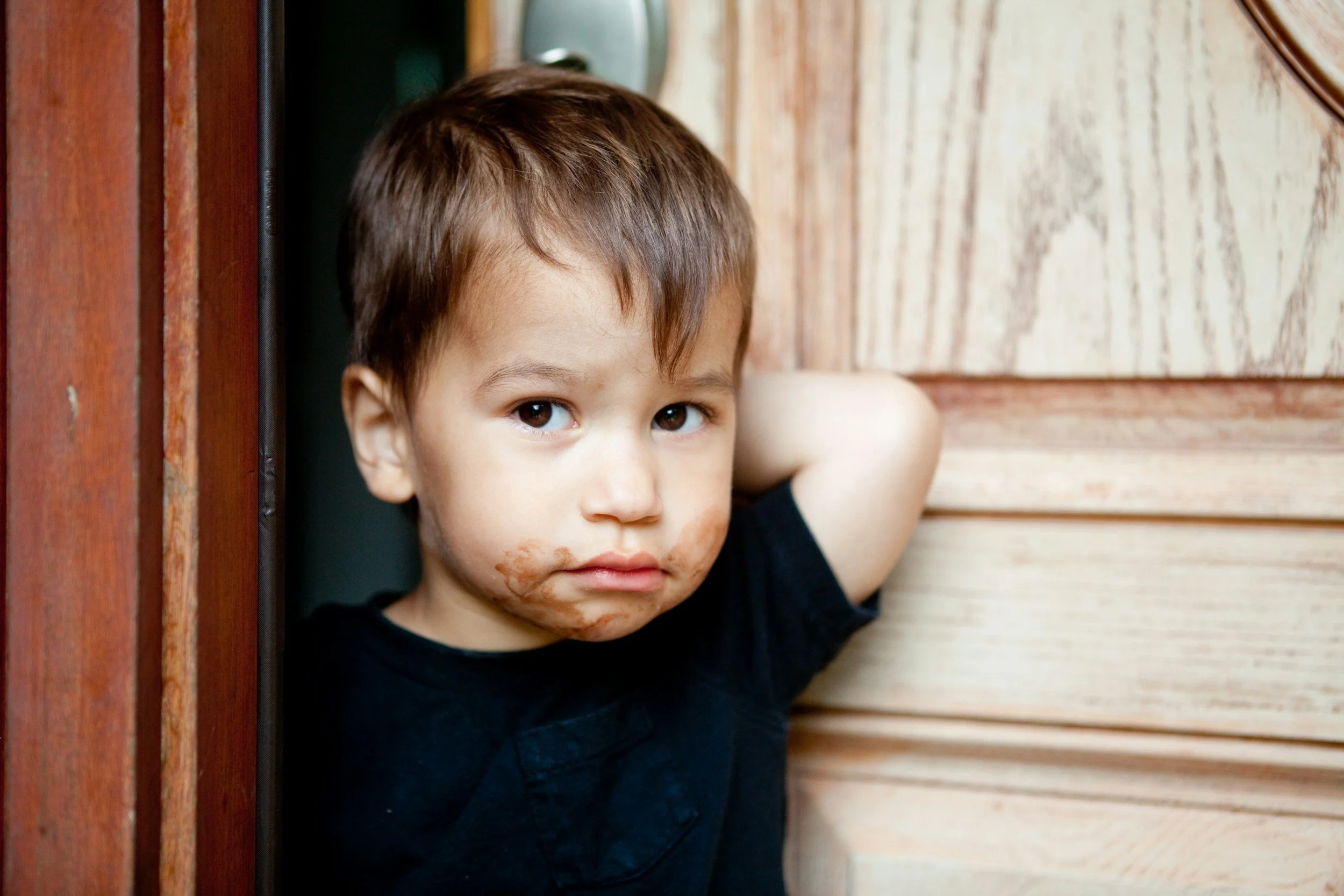
Your child knocks over a glass of milk while reaching across the table.
“Why did you put it there?!”
You watch them shove their sibling, and before you've even had an opportunity to say anything, they announce, “She made me do it!”
Or maybe your child gets in trouble at school, and by the time you've heard the story, their teacher, their best friend, the kid sitting next to them, and possibly the pencil they were using are all somehow responsible for what happened.
It can be incredibly frustrating when a child seems completely unwilling to take responsibility for something they very clearly did. As adults, we want children to be able to recognize when they've made a mistake, acknowledge the impact of their behavior, and make things right. When they immediately blame someone else, it can feel like they are being dishonest or intentionally avoiding accountability.
But taking responsibility requires more from children than simply knowing what happened. They also have to be able to tolerate all of the uncomfortable feelings that come along with admitting, I did that.
For some children, that can be really hard.
Why Blaming Works
Imagine that you have just done something you know you weren't supposed to do. An adult is standing over you looking upset, and you know a consequence is probably coming. Maybe you're already embarrassed. Maybe you're afraid they're going to yell. Maybe you feel terrible about what happened.
Then your brain discovers a possible escape route.
It wasn't my fault.
Suddenly, instead of dealing with what you did, you can focus on everything everyone else did wrong.
Children are still developing the skills involved in impulse control, perspective taking, emotional regulation, and reflecting on their own behavior. Sometimes the impulse that caused the original behavior happens incredibly quickly. A child gets angry and pushes their brother. Only afterward do they have to make sense of the fact that they just did something they know they weren't supposed to do.
“The problem is that he took my toy!” may feel much easier to tolerate than, “I got so angry that I hurt someone.”
That doesn't mean we accept the blame as an excuse. It does mean that understanding why a child is defending themselves can help us respond in a way that makes taking responsibility more possible.
When Mistakes Feel Like Identity
For some children, admitting a mistake feels particularly threatening because they have difficulty separating I did something bad from I am bad.
This can be especially difficult for children who struggle with perfectionism, anxiety, or low self-esteem. If your child's sense of themselves depends heavily on being “good,” getting things right, or making adults happy, acknowledging that they did something wrong can feel enormous.
Think about how differently two children might experience being corrected.
One child thinks, Oops. I wasn't supposed to do that.
Another thinks, Mom is mad. I messed up. I'm bad. She doesn't like me anymore.
If that's where your child's brain goes when they make a mistake, blaming someone else suddenly makes a lot more sense. They aren't necessarily trying to convince you that reality didn't happen. They may be trying to protect themselves from an emotional experience they don't yet know how to manage.
This is one reason piling shame onto a child who is already defensive usually doesn't get us very far. If the child is working desperately to prove that they are not the bad guy, making them feel worse about themselves may simply make them work even harder to defend themselves.
The Other Kid May Have Done Something
There is another complication. Sometimes your child is right.
Maybe their brother really did grab the toy first. Maybe another child called them a name before they shoved them. Maybe the teacher misunderstood part of what happened.
When adults are focused on getting children to take responsibility, we can accidentally communicate that the rest of the situation doesn't matter. From the child's perspective, that can feel incredibly unfair.
We can acknowledge both.
“Your brother grabbed the toy from you, and you were really angry about that. You chose to hit him.”
Both things are true.
Your child's feelings make sense. Someone else may genuinely have behaved badly. Your child is still responsible for what they chose to do next.
Helping children hold these ideas together is much more useful than trying to determine who was officially “the bad one.”
Accountability Without Shame
If we want children to become more accountable, they need to know that admitting mistakes is emotionally safe.
That doesn't mean there are no consequences. Child-centered parenting is not about letting children do whatever they want because we understand why they did it. Limits and accountability are important.
But accountability works better when it is focused on the behavior rather than the child's character.
There is a big difference between “You lied to me about what happened” and “You're a liar.” There is a difference between “You made a choice that hurt your sister” and “You're being a bad brother.”
One describes something the child did. The other tells the child something about who they are.
Children need to develop the ability to think, I made a bad choice, and I can do something different next time. That is much harder to do when the conclusion becomes, I am bad.
Slow Down the Investigation
Parents can also accidentally turn these situations into courtroom proceedings.
“Why did you do that?”
“Did you know you weren't supposed to?”
“Who started it?”
“Are you telling me the truth?”
Sometimes we are asking questions because we genuinely need information. Other times, we already know exactly what happened and are hoping the child will confess.
The problem is that “Why did you do that?” often assumes a level of self-awareness that children don't necessarily have. Sometimes the completely unsatisfying answer of “I don't know” is actually true.
Instead, we can help children put the pieces together. And often times, if you know enough to ask a question, you know enough to make a statement. If you witnessed what happened, there is no need to ask a child a leading question, with the hope that they will confess. Start with what you know. If you saw your child and their sister in a tussle, described what you witnessed.
“You were getting really frustrated when she wouldn't give it back. You got so angry that you pushed her.”
Now we're helping the child connect the feeling, the impulse, and the behavior. Over time, children can become better at recognizing that sequence themselves.
That is much more useful than extracting a confession.
Repair Matters More Than Confession
When something has gone wrong, I am usually more interested in what happens next than whether a child can be convinced to say exactly the right words.
Once they are regulated enough to move past the situation, you can offer ways to reengage them and help them to take accountability for the choice they made. Can they help clean up what they spilled? Can they return what they took? Can they check whether someone they hurt is okay? Can they think about what they might do differently next time?
This doesn't have to mean forcing an immediate apology. A furious child mumbling “sorry” because an adult demanded it doesn't necessarily tell us much about whether they understand the impact of what happened.
Responsibility is something children gradually develop through experience. They learn that they can make mistakes, tolerate the feelings that come with those mistakes, make repairs when possible, and move forward.
That last part matters.
The mistake does not have to define them.
Making Mistakes Safer
One of the most important things we can do is model what taking responsibility actually looks like.
Adults mess up all the time. We lose our patience. We misunderstand things. We forget promises. We make assumptions. When we acknowledge those mistakes without collapsing into shame or becoming defensive, children get to see what accountability looks like in real life.
“I was frustrated earlier and I yelled. I shouldn't have yelled at you. I'm sorry.”
There is no lengthy explanation about why the child drove us to it. There is no “I'm sorry, but you weren't listening.”
We did something we wish we hadn't done, we took ownership of it, and the relationship survived.
That is an incredibly important lesson.
For families looking for a child therapist in San Luis Obispo or parenting support on the Central Coast, persistent blaming can sometimes be part of a larger pattern involving anxiety, perfectionism, low self-esteem, emotional regulation, or difficulty tolerating mistakes. Child-centered play therapy gives children opportunities to experience responsibility, make choices, encounter limits, and discover that mistakes don't threaten their relationship with the play therapist.
Ultimately, we want children to be able to say, I did that. I wish I hadn't. I can try to make it right.
Getting there requires accountability, but it also requires enough emotional safety to admit when you've gotten something wrong.
References
Landreth, G. L. (2012). Play Therapy: The Art of the Relationship (3rd ed.). Routledge.
Bratton, S. C., Landreth, G. L., Kellam, T., & Blackard, S. R. (2006). Child Parent Relationship Therapy (CPRT) Treatment Manual: A 10-Session Filial Therapy Model for Training Parents. Routledge.
Thompson, R. A. (2014). Socialization of emotion and emotion regulation in the family. In J. J. Gross (Ed.), Handbook of Emotion Regulation (2nd ed., pp. 173–186). Guilford Press.
Tangney, J. P., Stuewig, J., & Mashek, D. J. (2007). Moral emotions and moral behavior. Annual Review of Psychology, 58, 345–372.