How Children's Play Changes as They Build Trust, Explore Emotions, and Develop Confidence
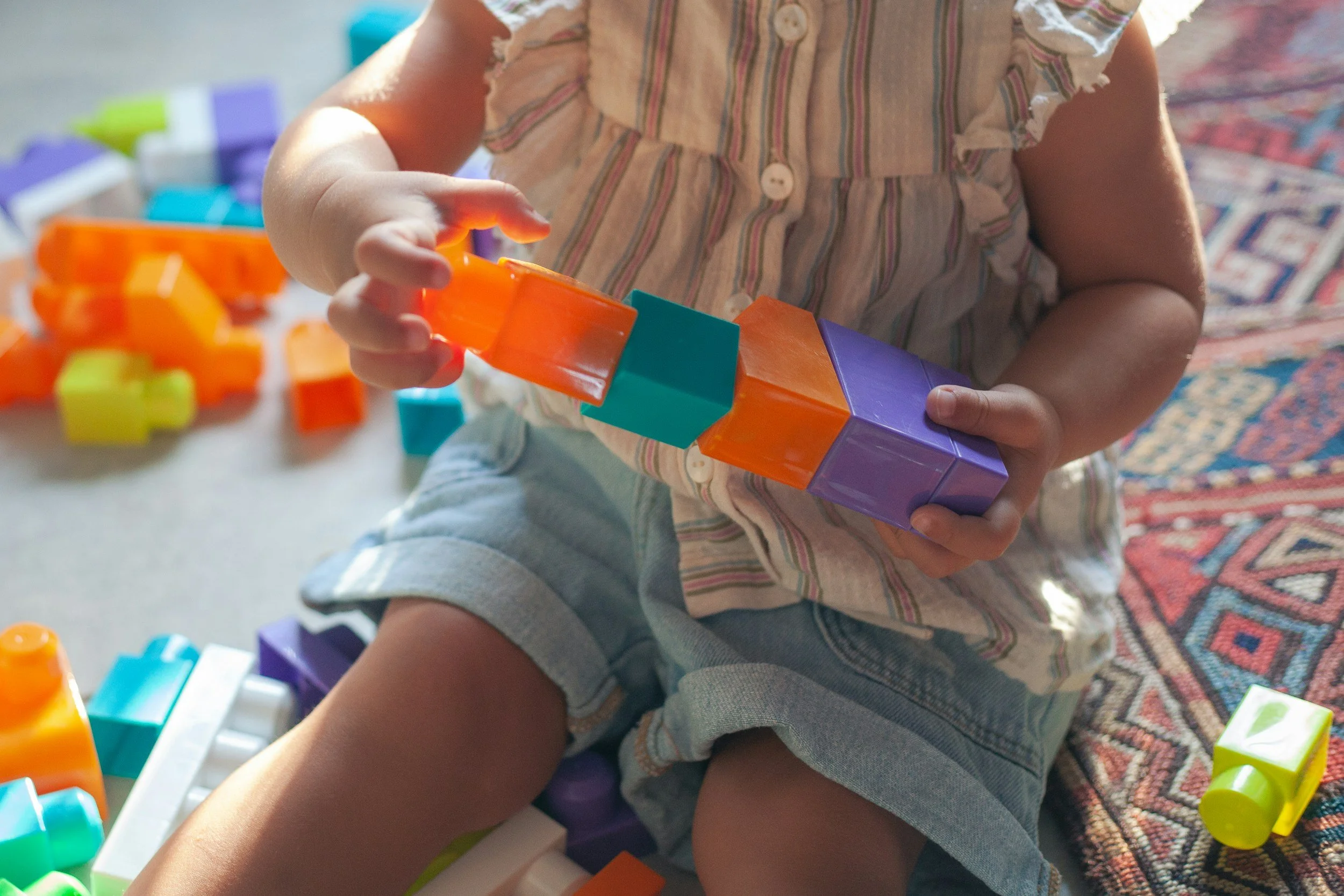
When parents imagine what happens during play therapy, they might picture their child spending time with toys, creating imaginary worlds, or engaging in games with their therapist. While these activities are certainly part of the experience, what children choose to play, how they approach their play, and the ways they interact with their therapist can change considerably over the course of treatment.
These changes are often meaningful.
In child-centered play therapy (CCPT), children use play to explore emotions, relationships, and experiences that they may not yet have the words or developmental capacity to express directly. As children become more comfortable within the therapeutic relationship, the themes that emerge in their play may shift to reflect different emotional and developmental needs.
Play therapists often recognize four broad stages of play: warm-up, aggressive, regressive, and mastery. Each stage offers children opportunities to explore different aspects of themselves and their relationships with others.
These stages aren't rigid milestones that every child must complete in a particular number of sessions. Children may move between them, explore themes from multiple stages at once, or revisit earlier patterns as new needs arise. Some children spend considerable time in one stage and move through another relatively quickly.
Understanding these stages can help parents appreciate why their child's play may change throughout therapy, including why some of the most important therapeutic work doesn't always look like what adults would consider positive or productive behavior.
Stage One: Warm-Up Play
Finding Their Feet
When children first enter the playroom, they're stepping into an environment that's quite different from most of the places they spend their time.
They're surrounded by unfamiliar toys and materials, meeting a new adult, and discovering that they have considerable freedom to decide what happens during their time together.
For some children, this is immediately exciting. They move quickly from one activity to another, eager to investigate everything the playroom has to offer. Others are more cautious, taking their time to observe, explore, and understand what is expected of them.
During the warm-up stage, children are primarily getting to know the playroom, the therapist, and the nature of the therapeutic relationship.
Their play often involves considerable exploration and experimentation. They may briefly engage with a toy before moving on to something else, try several different activities without becoming particularly invested in any of them, or test how I respond to different choices and behaviors.
Children are also learning about the boundaries of the playroom.
They may experiment with rules, test limits, or look toward me to see how I'll respond when they do something unexpected. Through these interactions, they begin discovering that they have freedom to make choices, that there are limits to keep everyone safe, and that my role is to support rather than direct their play.
Most importantly, they're beginning to determine whether this is a relationship in which they can feel safe being themselves.
Some children move through this stage within their first session or two. Others need considerably more time to become comfortable, particularly if they've had experiences that make trusting adults or unfamiliar environments difficult.
There's no single correct pace. The important work of this stage is establishing the trust and predictability that will support the emotional exploration to come.
Stage Two: Aggressive Play
Discovering That the Relationship Can Withstand Difficult Feelings
As children become more comfortable in the playroom and develop a clearer understanding of their role and mine, their play may begin to take on a different quality.
It may become louder, more intense, more competitive, or more controlling.
Children might engage in elaborate battles between good and bad characters, create scenarios involving conflict or revenge, insist that their characters are invincible, or repeatedly change the rules of a game to ensure they win.
They may also become increasingly controlling of me.
A child might insist that I'm not allowed to speak, tell me exactly what I'm permitted to do, or become frustrated when I establish a necessary limit.
To an adult unfamiliar with play therapy, some of these behaviors might seem concerning. Why would a child who is supposed to be learning emotional regulation spend so much time pretending to fight, destroy things, or control another person?
But aggressive play is a natural part of children's development.
Play involving competition, pursuit, conflict, and physical power can be observed across many mammalian species. Through these experiences, children have opportunities to explore their physical capabilities, understand social boundaries, experiment with control, and develop greater awareness of how their actions affect others.
In the playroom, aggressive themes may also serve important emotional purposes.
Children may be exploring what it feels like to have power, to be the strongest, to be invulnerable, or to control situations that might otherwise feel frightening or unpredictable.
They may also be working toward greater frustration tolerance, emotional expression, and self-control.
Importantly, aggressive play doesn't necessarily indicate that a child wants to hurt others or that they're becoming more aggressive outside of therapy. The meaning of play depends on the individual child and the broader context in which it occurs.
One of the most significant aspects of this stage involves the therapeutic relationship itself.
During aggressive play, children may begin revealing parts of themselves they perceive as unacceptable, including anger, jealousy, competitiveness, selfishness, or a desire to control others.
They may test whether I will continue to accept them when they're demanding, uncooperative, or expressing difficult feelings.
Through consistent responses and appropriate limits, children have opportunities to discover that the relationship can withstand these experiences.
I can acknowledge their anger without rejecting them. I can maintain a boundary without withdrawing warmth or acceptance. They can express a desire to control me without actually being given control over my safety or well-being.
Over time, these experiences can help children develop a greater capacity to accept limits, manage frustration, and express themselves constructively.
But perhaps even more importantly, they may begin learning something fundamental about relationships:
The parts of themselves that feel difficult, angry, or unlovable don't make them unworthy of acceptance.
And that discovery can create the foundation for the next stage of therapeutic work.
Stage Three: Regressive Play
Finding Safety in Vulnerability
While aggressive play often centers on themes of power, control, and invulnerability, regressive play tends to explore a very different set of emotional needs.
During this stage, children may begin engaging more deeply with themes related to attachment, dependency, nurturance, protection, closeness, grief, and loss.
Their play may become softer, more relational, or focused on caring for and being cared for by others.
A child might pretend to be a baby who needs feeding, comforting, or protection. They may create scenarios involving parents caring for children, doctors tending to patients, or large animals protecting smaller, more vulnerable ones.
Other play scenarios may involve separation and reunion, characters trying to keep loved ones together, or someone being rescued from danger.
These themes can reflect children's exploration of what it means to depend on another person, to need comfort, to experience closeness, or to trust that someone will be there when they're vulnerable.
For many children, this kind of exploration requires an extraordinary degree of trust.
Expressing anger or asserting control can be difficult, but allowing another person to see one's need for comfort, protection, or reassurance can involve an entirely different kind of vulnerability.
A child who has experienced rejection, inconsistency, loss, or difficulty in important relationships may be particularly sensitive to the possibility that their needs won't be met.
This is one reason the aggressive stage can be so important.
Before a child feels comfortable revealing the softer, more dependent parts of themselves, they may first need to discover that the therapeutic relationship can withstand their anger, defiance, and attempts to control.
If I can remain accepting and consistent when a child is expressing the parts of themselves they believe others might reject, it may become easier for them to trust me with the parts that feel vulnerable.
This isn't always a neat transition.
Children frequently move between aggressive and regressive themes, sometimes within the same session. A child might spend part of their time controlling a powerful character in battle, then shift into a scenario in which that same character needs comfort or protection.
Moving between these roles can allow children to explore and compare what it feels like to be powerful and vulnerable, independent and dependent, or the person providing care and the person receiving it.
When Regression Appears Outside the Playroom
Sometimes the regressive stage is accompanied by changes in a child's behavior outside of therapy.
A child who was previously quite independent may suddenly want more help with familiar tasks. They may begin speaking in a younger-sounding voice, asking questions about what they were like as a baby, seeking more physical affection, or wanting their parents to care for them in ways they haven't needed for some time.
Some children may also demonstrate changes in toileting, eating habits, or other previously established behaviors.
These changes can be confusing for parents, particularly when they thought their child was becoming more independent.
However, regressive behaviors can sometimes reflect a child's efforts to revisit earlier needs related to safety, care, dependency, and attachment.
This doesn't mean that every instance of regression is part of the therapeutic process. Sudden, persistent, or significant changes in functioning should always be discussed and may warrant further assessment.
When these behaviors occur alongside corresponding play themes, however, they can sometimes provide additional context for understanding what a child is exploring emotionally.
The goal of this stage isn't for children to become dependent on others. Rather, it's for them to develop a more secure understanding that needing support, comfort, and connection is a normal part of being human.
Paradoxically, feeling secure in our ability to depend on others can help us become more confident in our independence.
Stage Four: Mastery Play
Growing Into Confidence and Competence
As children work through the emotional and relational tasks of earlier stages, their play may begin reflecting a growing sense of confidence, competence, and flexibility.
This is often referred to as the mastery stage.
During this stage, children have opportunities to integrate many of the capacities they've been developing throughout treatment.
They may become more comfortable expressing emotions, making decisions, accepting limits, taking responsibility, cooperating with others, and navigating frustration.
Their play often begins to reflect a more balanced sense of themselves and their relationships.
For example, a child who previously insisted on winning every game may begin playing more fairly. They still want to win, but they're increasingly able to recognize that other people have feelings and preferences, too.
A child who once portrayed their characters as entirely good or entirely bad may begin creating more complex stories.
The villain might turn out to have some good qualities. A superhero might become tired of always being responsible for saving everyone. A powerful character might discover that sometimes they need help.
These changes can reflect a growing capacity to recognize complexity, tolerate conflicting feelings, and understand that people don't have to be entirely good, strong, or successful to be worthy of care and respect.
Children may also demonstrate greater persistence when something becomes difficult.
Instead of abandoning a task when they encounter frustration, they may experiment with different approaches, ask for help when they genuinely need it, or continue trying until they find a solution.
Their sense of competence becomes less dependent on always succeeding and more connected to their belief that they're capable of handling challenges.
Another interesting change involves how children relate to me.
During earlier stages, children may have worked hard to control my actions or ensure they always had the upper hand. During mastery, they may become more comfortable engaging with me as a cooperative partner.
They might enjoy teaching me something they've learned, proudly demonstrating a new skill, or taking on a leadership role without needing to dominate the interaction.
Sometimes they begin joking with me more freely, even offering playful criticism or teasing. These interactions can reflect a growing sense of security in the relationship, as children become more comfortable navigating differences and expressing themselves without fearing rejection.
Children may also return to toys or activities they enjoyed during the warm-up stage.
But the quality of their play may feel different.
Where earlier play might have involved considerable uncertainty, urgency, or a need to maintain control, the child may now approach familiar activities with greater ease, flexibility, and enjoyment.
Mastery isn't about becoming perfect, never feeling frustrated, or always making the right choice.
It's about developing a more integrated sense of self: recognizing that they can experience difficult emotions, make mistakes, need support, and still be capable, valuable, and effective in the world.
This growing sense of competence and emotional security is often an important consideration as we begin evaluating a child's readiness to move toward the end of therapy.
Why the Stages Don't Always Follow a Straight Line
Although I've described these stages in a particular order, it's important to understand that children's play doesn't always follow a predictable sequence.
Many children demonstrate a general progression from warm-up to aggressive, regressive, and mastery play. However, the transitions between stages are often gradual, and themes from different stages frequently overlap.
A child may spend part of a session exploring aggressive themes and another part engaging in nurturing or dependent play. As they move toward a new stage, the proportion of time they spend exploring certain themes may gradually change.
Some children work through two stages in parallel. Others may briefly return to an earlier stage after spending considerable time in a later one, particularly when they're approaching termination or navigating new challenges.
Children also spend different amounts of time in each stage depending on their individual needs.
A child who has relatively little difficulty with issues of power and control but significant concerns related to attachment and relationship security may move quickly through aggressive play and spend considerably more time exploring regressive themes.
Another child may need extensive opportunities to experiment with control, frustration, and limits before they're ready to explore more vulnerable emotional experiences.
These differences don't necessarily indicate that one child is making better progress than another.
Rather, they reflect the individualized nature of the therapeutic process.
It's also worth distinguishing the stages of play from the broader phases of therapy.
In addition to recognizing patterns in children's play, I consider how children are engaging with the therapeutic process itself. This may involve phases of initiation, resistance, working, and termination.
These frameworks describe different aspects of treatment. A child can be actively working through aggressive or regressive play themes while also navigating resistance or becoming increasingly engaged in the therapeutic relationship.
Neither framework should be treated as a rigid timetable or a checklist that determines when a child is ready to move forward.
What Do These Stages Mean for Parents?
When I meet with parents during check-ins, I often share broad observations about the themes emerging in their child's play and how those themes may be changing over time.
For example, I might explain that a child has been exploring themes related to power and control, or that their play has become increasingly focused on nurturing, protection, and relationships.
I'll also discuss how these themes may relate to the child's emotional development, their relationship with me, and the concerns that initially brought them to therapy.
However, I generally avoid providing detailed accounts of individual play scenarios.
Children need to experience the playroom as a place where they can express themselves freely, without worrying that everything they do or say will be reported back to their parents.
It's also important to remember that a particular toy, character, or play scenario doesn't have one fixed psychological meaning.
A child pretending to be a baby doesn't automatically indicate an attachment difficulty. A child repeatedly engaging in battles isn't necessarily experiencing significant anger or aggression outside of therapy.
The meaning of play emerges through patterns observed over time, the child's individual circumstances, and the context of the therapeutic relationship.
For this reason, I don't encourage parents to analyze their children's play at home or try to determine which stage they're in based on a particular activity.
Instead, I encourage parents to remain curious about their children's experiences, follow their lead during play, and provide opportunities for emotional expression without judgment.
The most valuable thing parents can offer isn't an interpretation of their child's play, but a relationship in which their child feels understood, accepted, and supported.
Trusting the Process
One of the remarkable things about child-centered play therapy is that children often find ways to explore and work through complex emotional experiences without needing to explain them in words.
Through play, they can experiment with power and vulnerability, independence and dependency, competition and cooperation, and the many different ways people relate to one another.
As the therapeutic relationship develops, children have opportunities to discover that their difficult emotions don't make them unacceptable, that needing others doesn't make them weak, and that making mistakes doesn't diminish their worth.
Over time, these experiences can support a growing sense of emotional security, self-control, confidence, and resilience.
The stages of play therapy offer one way of understanding this process, but they're not a substitute for seeing each child as an individual.
Every child brings their own experiences, strengths, needs, and pace of development into the playroom.
My role is to provide a consistent, accepting relationship in which they can explore those experiences, develop new capacities, and gradually discover more adaptive ways of navigating their world.
At Power of Play SLO, I provide child-centered play therapy for children ages 3–12 in San Luis Obispo, serving families throughout the Central Coast. Through the therapeutic relationship and ongoing collaboration with parents, my goal is to support children as they develop the emotional awareness, confidence, and sense of security they need to thrive.
Because the most meaningful changes in play therapy aren't simply about what children learn to do.
They're about who children begin to understand themselves to be.
References
Axline, V. M. (1969). Play therapy. Ballantine Books.
Cochran, N. H., Nordling, W. J., & Cochran, J. L. (2010). Child-centered play therapy: A practical guide to developing therapeutic relationships with children. John Wiley & Sons.
Landreth, G. L. (2012). Play therapy: The art of the relationship (3rd ed.). Routledge.
Ray, D. C. (2011). Advanced play therapy: Essential conditions, knowledge, and skills for child practice. Routledge.
VanFleet, R., Sywulak, A. E., & Sniscak, C. C. (2010). Child-centered play therapy. Guilford Press.